Judges: Leaders in the New Nation
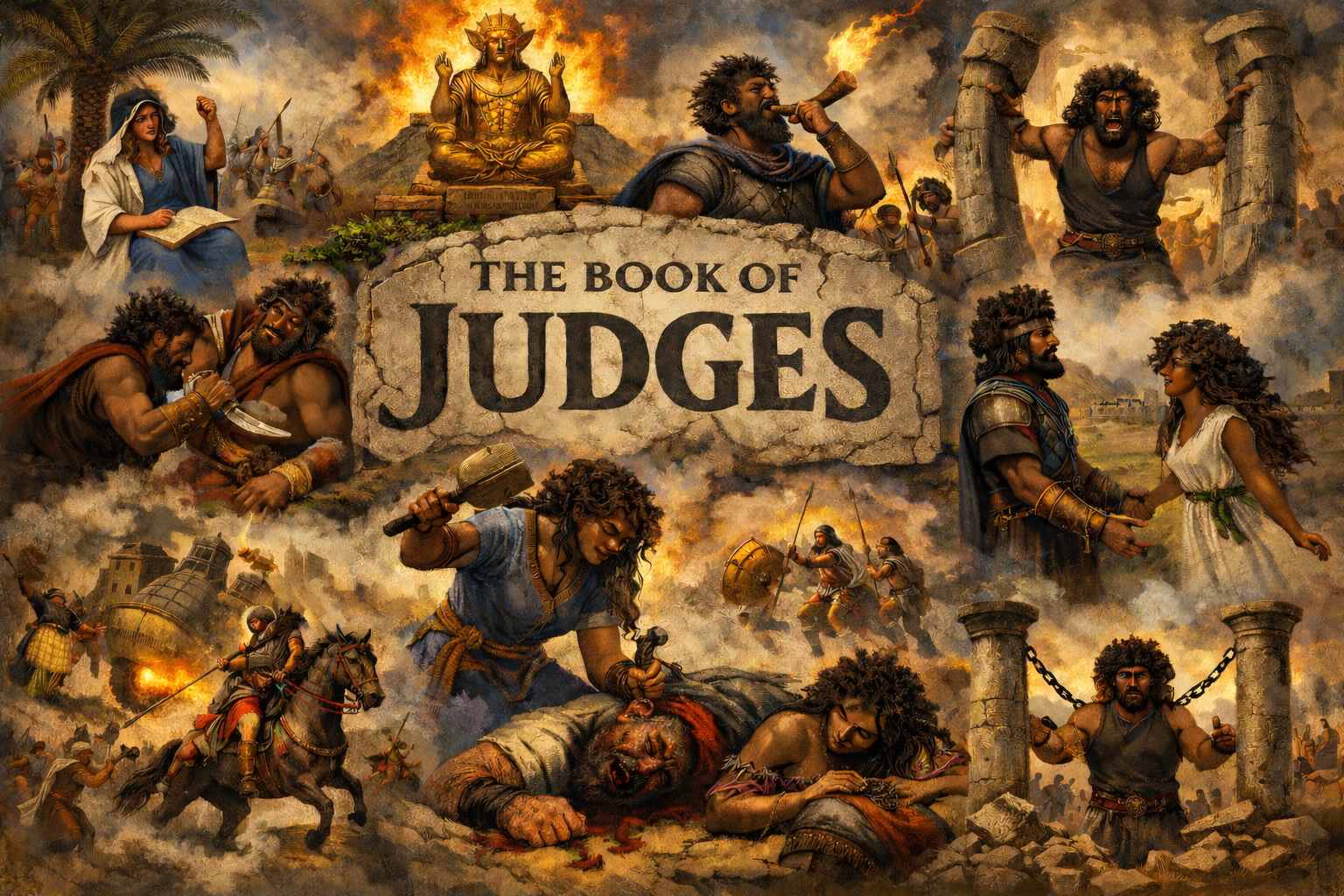
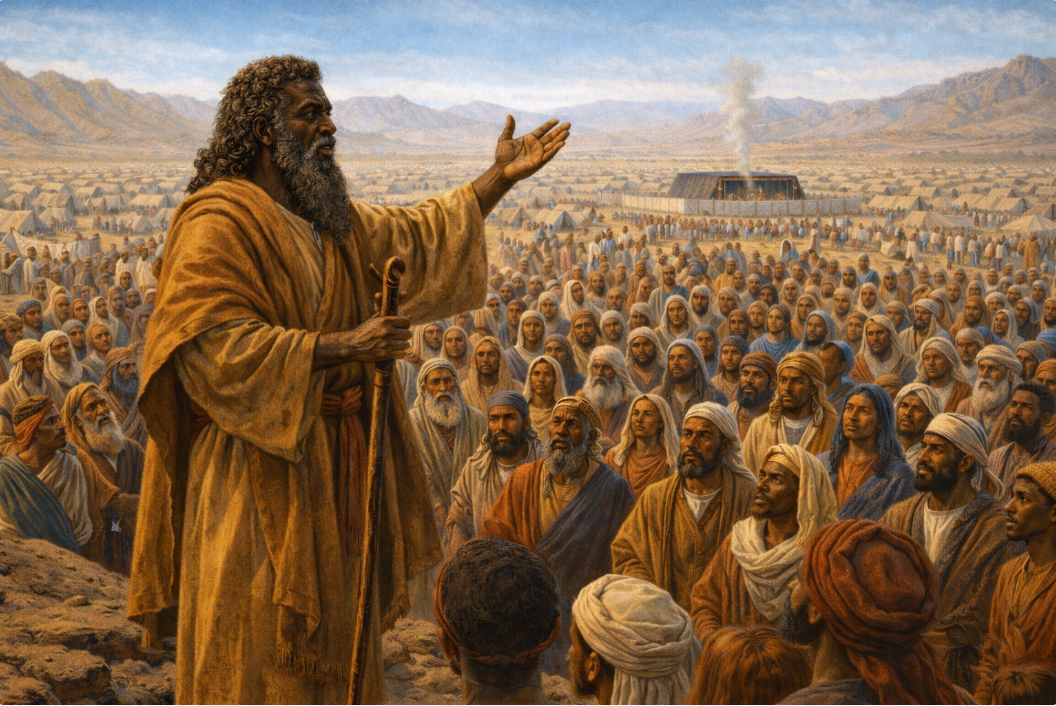
The Book of Judges continues the story of the Hebrew people and their occupation and presence in the Promised Land. No longer are the Hebrews trying to get to the Promised Land, the Promise is their reality, and God has allowed a unique way for them live and govern themselves in the land. For the first time since they left Egypt under the leadership of Moses, the Children of Isreal are not led by a single leader but by a series of Judges. Like the book of Leviticus, the book of Judges is also overlooked and one of the least popular of the 12 Books in the Historical Writings.
Judges covers the history of Isreal during their first 200-400 years in the Promised Land. Judges is divided into three parts:
Chapters 1-2 Introduction
Chapters 3-16 Covers the 12 Judges
Chapters 17-21 The Moral Decline that classified the Nation
Judges’ show us how the Hebrews were to live once they entered Canaan. This is a consistent pattern in the Old Testament. After the people get to a certain place there are rules and regulations they are to follow. In Leviticus literally just twenty Days between the setting up of the tabernacle and the departure of the people from Mt. Sinai God gives the people a series of directives. Those directives are: The Way to God: Sacrifice (Leviticus 1:10:20) and The Walk with God: Separation (Leviticus 11:1-27:34).
Now that the Hebrews/Israelites are in Canaan they are to follow a different set of guidelines. They are no longer nomadic people: they are now building a nation. It makes sense that a nation have a different set of guidelines than a people wandering around in the wilderness.
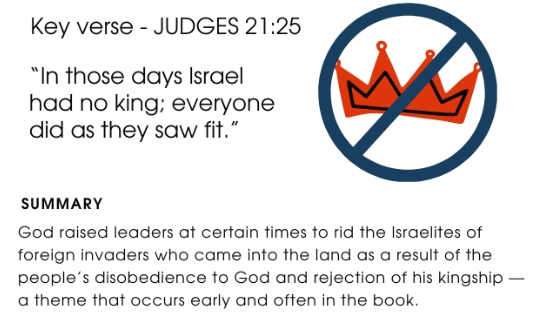
Biblical Scholars recognize three possible reasons explaining Israel’s rise to power in Canaan.
- The “Conquest theory,” which posits that Israel came in from the outside and conquered the land
- The “peaceful settlement theory,” which argues that the Israelites entered gradually settling in the sparsely populated areas of the central Highlands.
- The “Peasant Revolt or Social Revolution theory,” which contends that Canaanites rose up against their masters
Historically, Christians except the conquest theory that the Hebrews came in from the outside and conquered the land that was promised to them. The Hebrews did this because they were being obedient to God and living out the covenant that God promised Abraham to make his descendants a great nation.
The conquest of Canaan or the Promised Land was sanctioned by God. The question becomes what does God want us to have, that we have to take aggressively (from someone else)? When is war just? Does a loving God promise some people something and curse others? These are theological questions, but they come out of scripture. When does God’s will for our lives, hurt the lives of others who are not in God’s plan? When or how is this acceptable?
All of these are reasonable questions. One major theme that still arises is the people’s obedience and disobedience to God. No matter how God blesses and takes us to different stages and levels in our lives, we are still required to be obedient. The Children of Isreal at every step of their journey have a hard time being obedient and there are consequences to their actions. Why is this theme so prevalent in the scriptures and particularly the Old Testament? We are just like the Children of Isreal. We have trouble walking consistently with God and that often gets us into trouble.
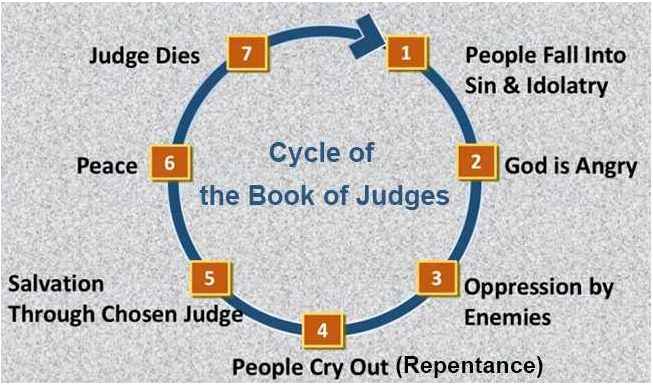
This cycle of obedience and disobedience is found throughout Historical Writings and especially in the Book of Judges. The main portion of the book of Judges is found in Judges 3:7-16:31 and centers around the major Judges: Othniel, Ehud, Deborah, Gideon, Jephthah and Samson
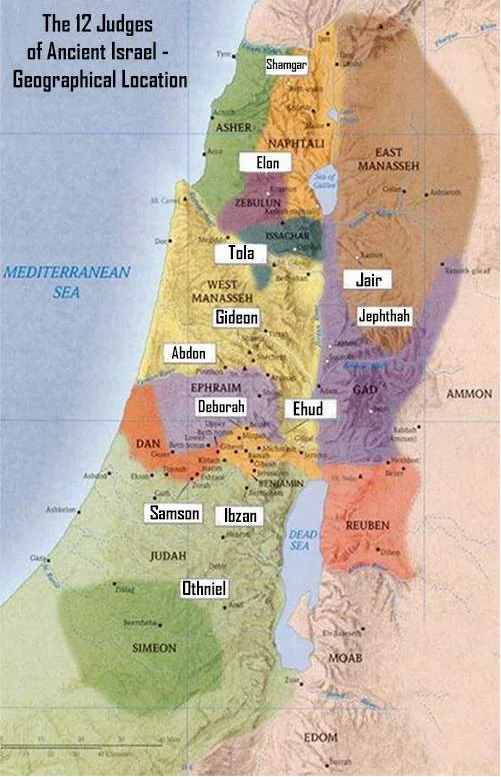
However, the Book of Judges covers the lives of 12 Judges: Othniel, Ehud, Shamgar, Deborah, Gideon, Tola, Jair, Jephthah the Gileadite, Ibzan, Elon, Abdon and Samson. Please click for a map of the Judges in the areas where they served.
This cycle of disobedience comes after a season of prosperity followed by Sin, Suffering, Prayer and Repentance and finally Salvation/Relief. The Bible is a book of redemption and hope. But many of the books are centered around leadership, character, perseverance and the passing of the mantle from generation to the next
It’s so easy to read the news today and get depressed about the evil and the many injustices that are so prevalent among us. The Book of Judges helps us realize that all of us can be caught in cycles of Sin, but there is redemption if we do the hard work of repenting and renewing our covenant with God.
“Straight from the Heart” of Carey A. Grady
“Straight from the Heart” of Carey A Grady originally started in January of 2008 as a weekly devotional when I was completing a Clinical Pastoral Education Residency. It was a way to connect with the members of the St. Peter AME Church in Decatur, Illinois and encourage daily devotions as we read the Daily Walk Bible. Through the years the readership has grown. Each week, a devotional or article is posted. Sometimes the post will be completely a Bible devotional and other times the post may be a commentary on what’s happening in society. This year each post has been centered in one book of the Bible. Please comment and post your thoughts and please subscribe. Hope you enjoy!